


CONTROLLING THE THERMAL PROCESS.
Controlling a thermal process means managing more than just temperature.
MWS develops furnace technology to manage heat transfer, treatment times and atmosphere, ensuring process uniformity and repeatability.
HEAT TRANSFER
Heat must not only be generated, but transferred to the product as effectively as possible.
When designing its furnaces, MWS works simultaneously on the different heat transfer mechanisms: radiation, through the arrangement of heat sources and the geometry of the treatment chamber; convection, through the management and circulation of gases; and conduction, through effective contact between the product, supports, conveyor belts and fixtures.
The balance between these mechanisms is studied according to the material, the process conditions and the required result.
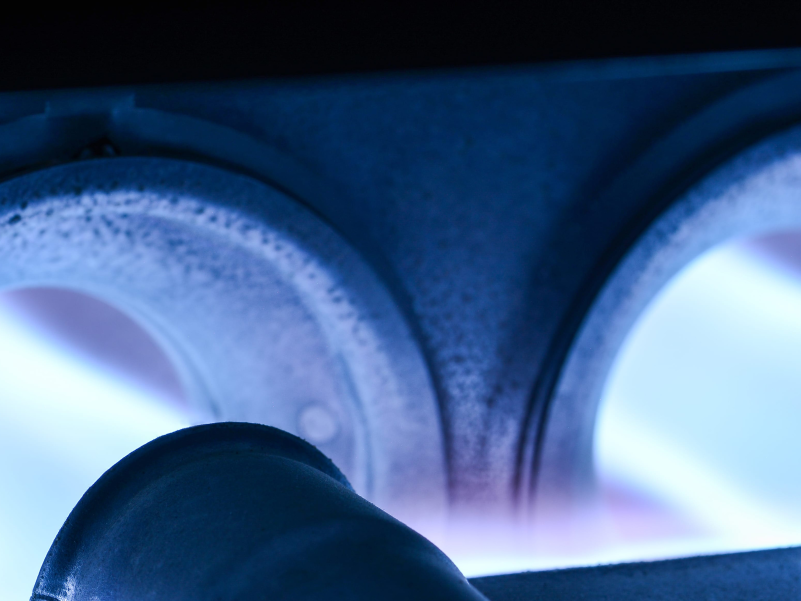

PROCESS VARIABLES
The outcome depends on the interaction of several parameters. Furnace technology must make them controllable, repeatable and adaptable to each application.
TEMPERATURE
Temperature profiles, heating and cooling rates, uniformity and stability.
TIME
Residence times and conveyor speeds defined according to the material’s response.
ATMOSPHERE
Management of gases and the process environment to protect or modify the product’s behaviour.
ENERGY WHERE IT IS NEEDED.
Effective insulation, proper management of heat transfer and accurate process control help reduce heat losses and improve overall furnace efficiency.
Reducing the energy required for treatment means lowering consumption and environmental impact while maintaining control over process performance.

FURNACE TECHNOLOGY BECOMES PART OF THE PROCESS.
Understanding the process determines the furnace configuration: heat sources, gas circulation, insulation, atmosphere, material handling and control.
Explore our furnaces →